Current Projects
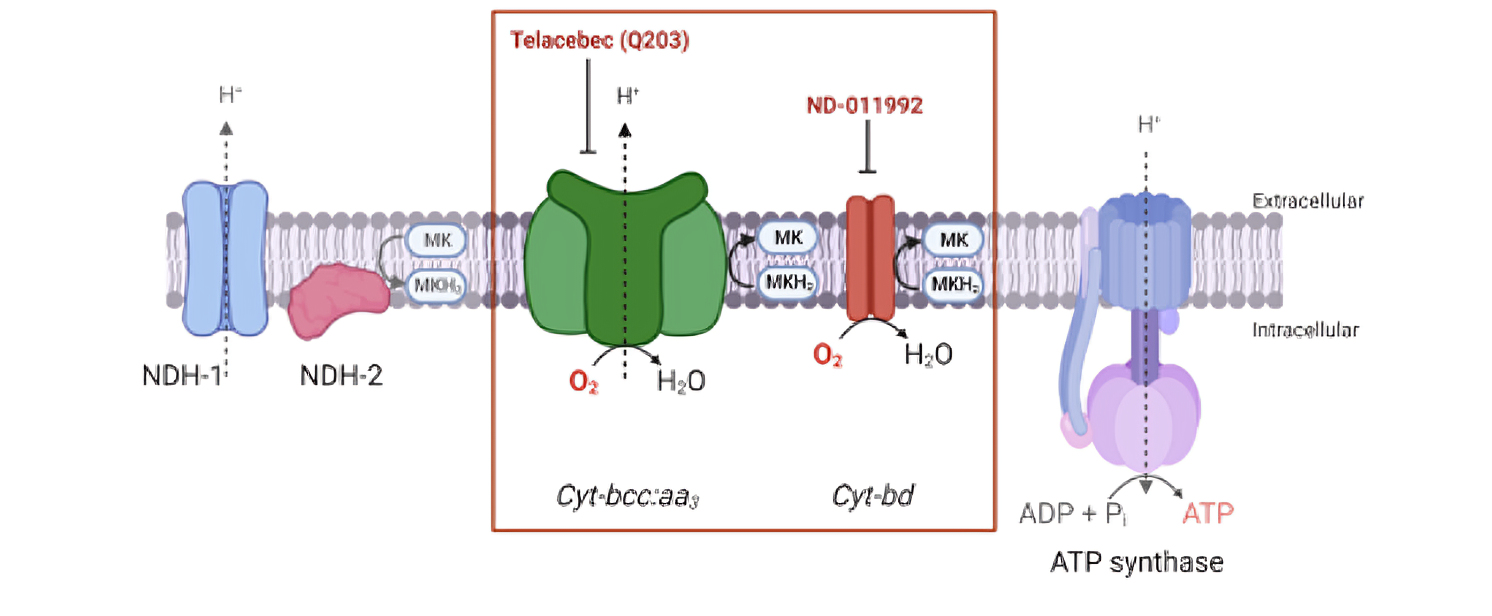
Garrett Moraski’s research centers on the rational design, synthesis, and optimization of small-molecule inhibitors targeting the bioenergetics of pathogenic mycobacteria, with a particular focus on Mycobacterium tuberculosis.
This work exploits the essentiality of oxidative phosphorylation by developing chemotypes that disrupt the mycobacterial electron transport chain, particularly by inhibiting the cytochrome bcc–aa3 supercomplex (QcrB) and cytochrome bd oxidase. Multiple structurally distinct scaffolds—including imidazo[1,2-a]pyridine carboxamides, imidazo[2,1-b]thiazole derivatives, and quinazoline-based inhibitors—have been shown to collapse the proton motive force, impair pH homeostasis, and deplete intracellular ATP pools, thereby inhibiting growth and viability.
Structure–activity relationship (SAR) and structure-guided efforts have yielded compounds with nanomolar potency against drug-sensitive, multidrug-resistant (MDR), and extensively drug-resistant (XDR) strains, while also demonstrating activity in macrophage infection models and nonreplicating, drug-tolerant populations.
Importantly, this research has advanced the concept that simultaneous targeting of multiple respiratory branches can produce synergistic and bactericidal effects, effectively eradicating persistent subpopulations refractory to conventional therapies. Complementary structural and chemical biology studies with collaborators have further enabled the elucidation of inhibitor binding modes within respiratory complexes, facilitating the design of next-generation QcrB inhibitors with expanded spectrum against nontuberculous mycobacteria such as M. abscessus and M. avium.
Collectively, this body of work establishes mycobacterial respiration as a highly vulnerable and druggable target space and provides a robust platform for the development of novel therapeutics aimed at shortening treatment duration and overcoming antimicrobial resistance.